Florence Artificial Turf
Desert-Adapted Turf Installs in Florence, AZ
Desert-adapted turf installs in Florence, AZ with heat-resistant fibers built for 110°F+ summers. Free estimates.
- 15+ Years local experience
- 500+ Projects completed
- Licensed & Insured
Serving Florence and nearby communities.
Not every turf product survives a Florence summer. Surface temps on standard turf can climb well past what's comfortable for bare feet or pets once the sun's been on it for a few hours. Florence Artificial Turf installs desert-adapted turf systems, specific fiber, infill, and base choices built to handle extended 110°F+ stretches without melting, fading, or buckling.
This isn't a different installation method so much as a different set of material decisions made up front, based on sun exposure and how the yard actually gets used.
What's included
What's Included
- Typically included — heat tolerance planning based on sun exposure, moisture and soil testing, reflective base prep, heat-resistant turf installation, expansion-gap seaming, surface temperature check
- Optional — reflective infill upgrade for the hottest-exposure areas, shade structure coordination
- Customer prep — note which areas of your yard get full sun all day versus partial shade before the site visit
Want a clearer scope?
Get a Free EstimateHow it works
How Our Desert-Adapted Turf Installs Process Works
 Step 1
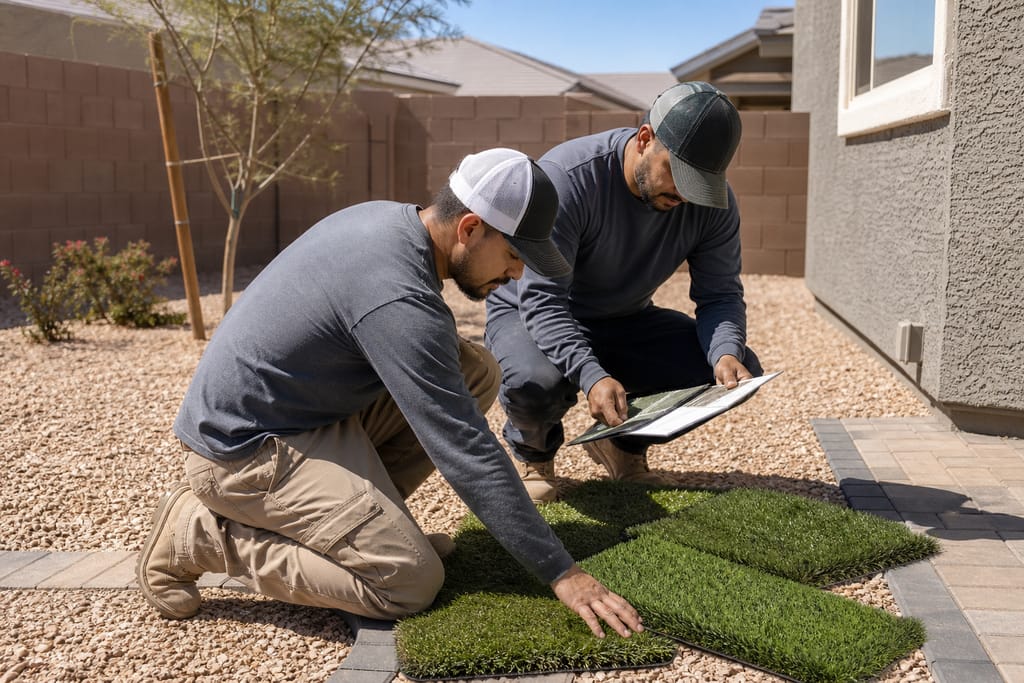
Heat tolerance planning
We select turf products based on resistance to high heat and direct sun exposure in your specific yard.
 Step 2
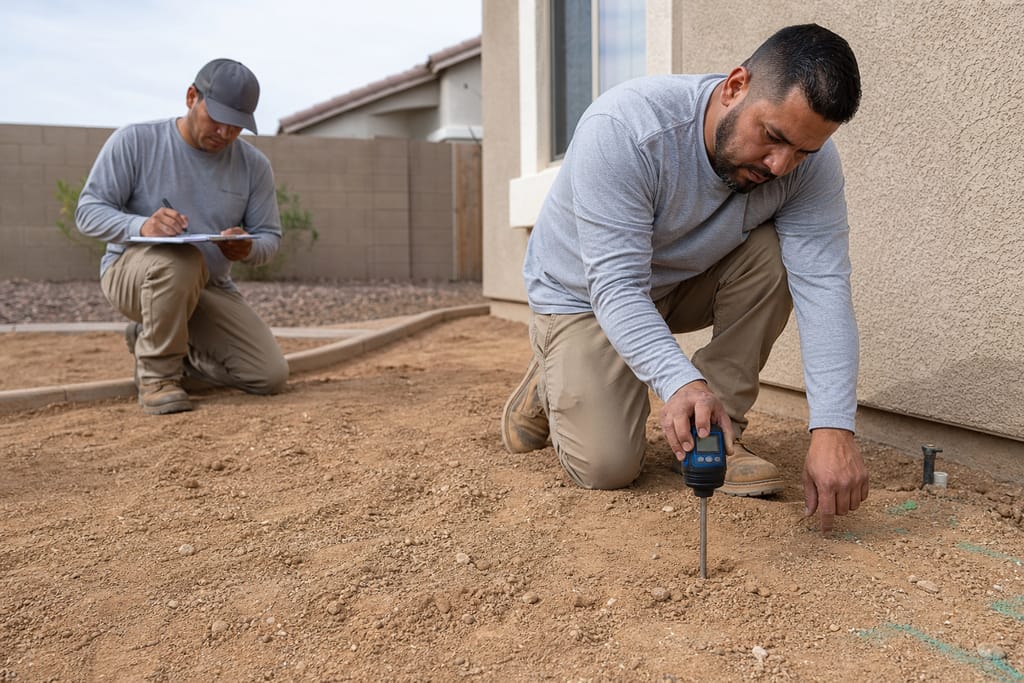
Soil moisture testing
Existing soil gets tested to plan drainage that works with Pinal County's dry conditions.
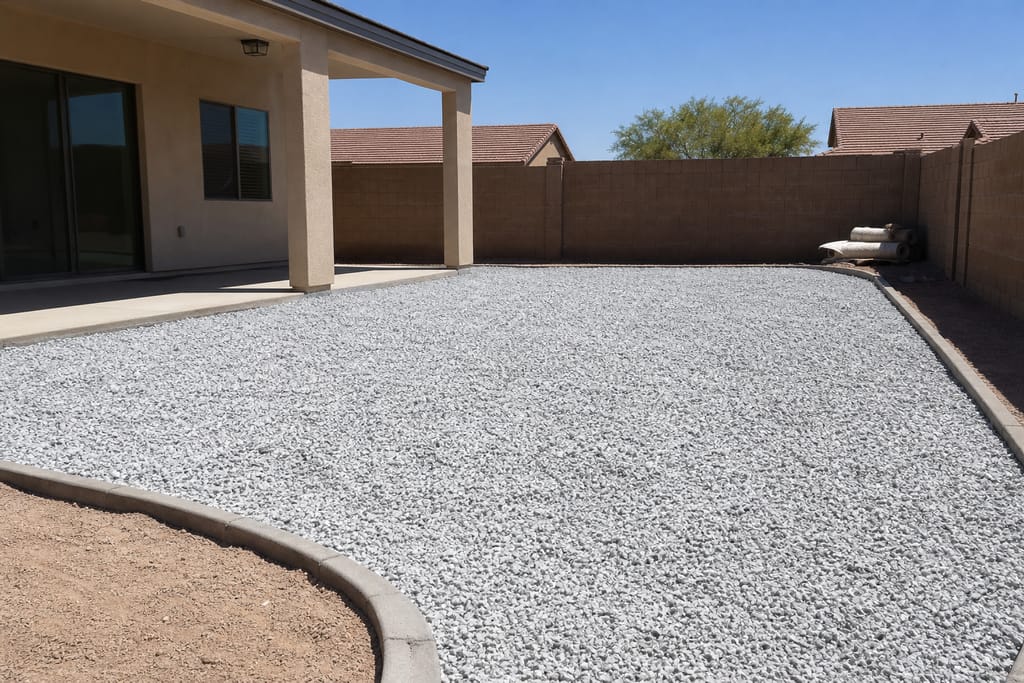 Step 3
Reflective base prep
Base materials are chosen to reduce heat buildup radiating up through the turf.
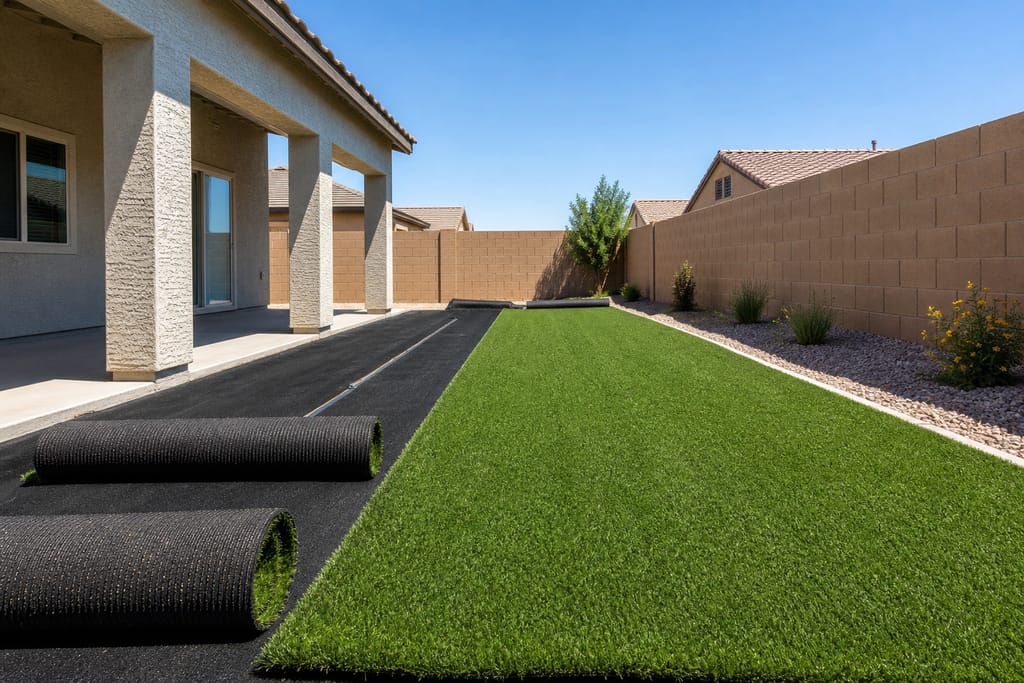 Step 4
Heat-resistant turf laying
Specialized desert-rated fibers go in, built to hold up under extreme temperatures.
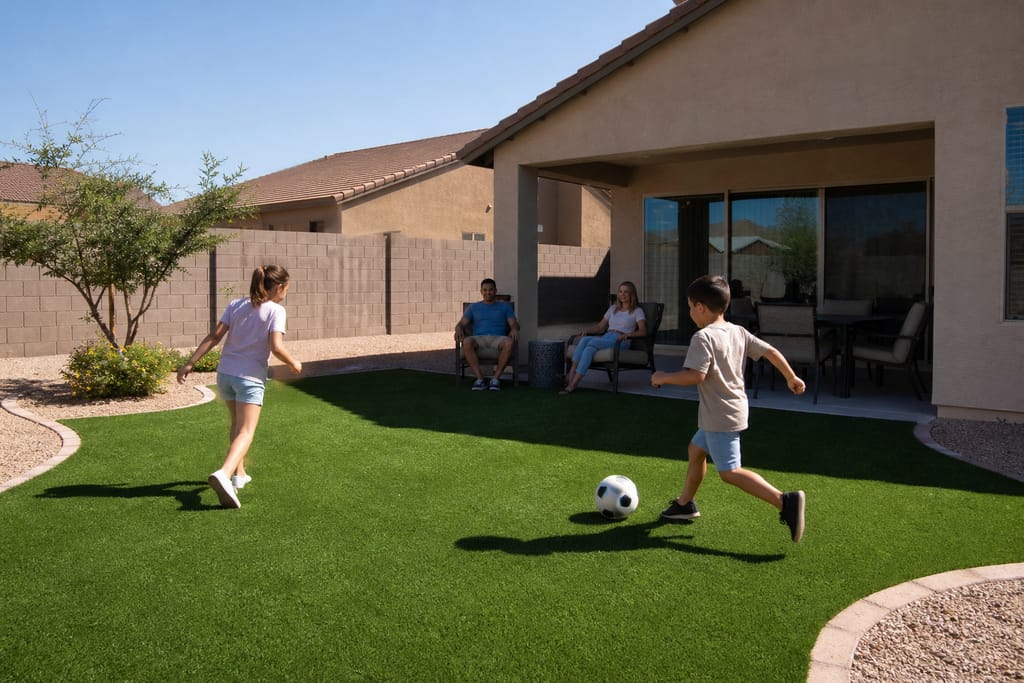 Step 5
Expansion gap allowance
Small seam gaps account for material expansion once the turf heats up.
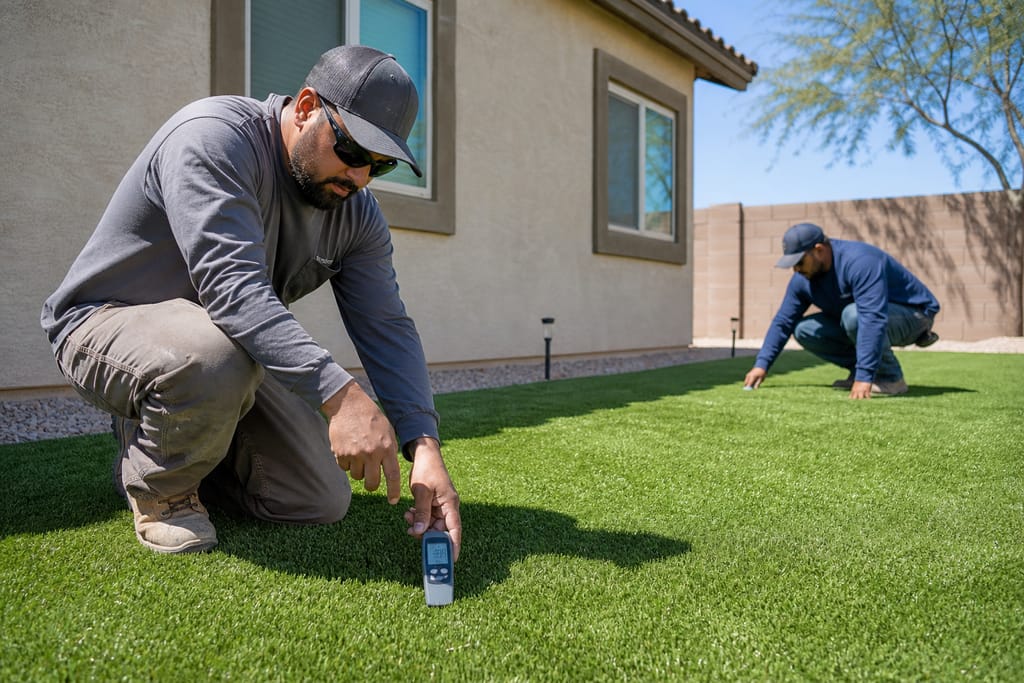 Step 6
Surface cooling check
We test the finished surface temperature under direct sun before walkthrough.
Materials
Materials and Methods for Desert-Adapted Turf Installs
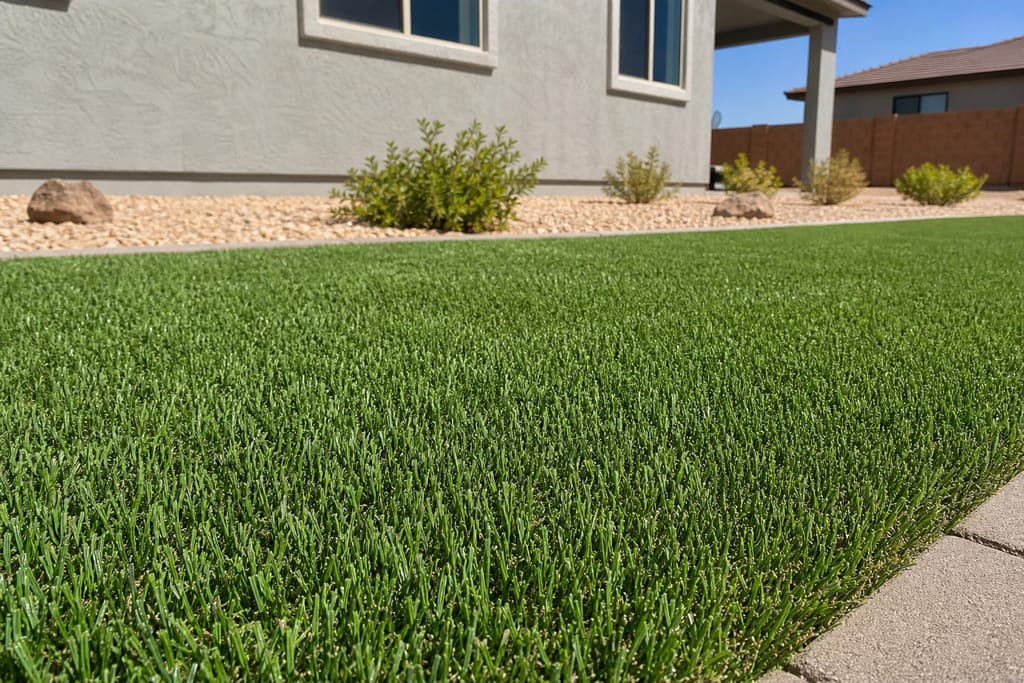
Heat-resistant turf fibers
Fibers engineered to resist melting and color fade under sustained Arizona sun exposure.
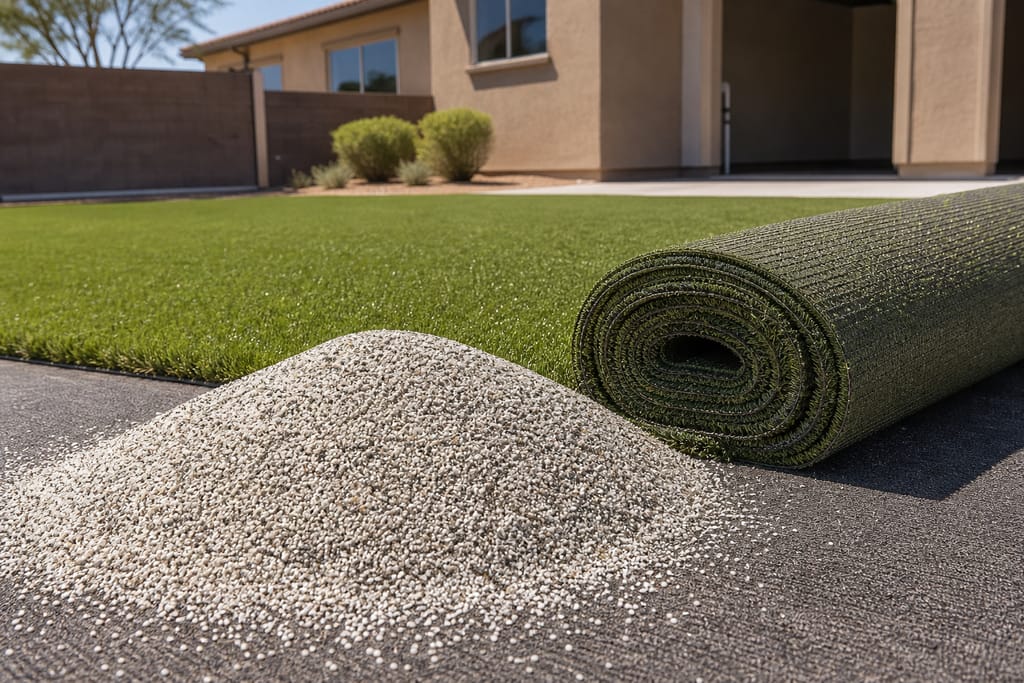
Reflective infill blend
This infill reflects heat instead of absorbing it, cutting down surface temperature buildup.
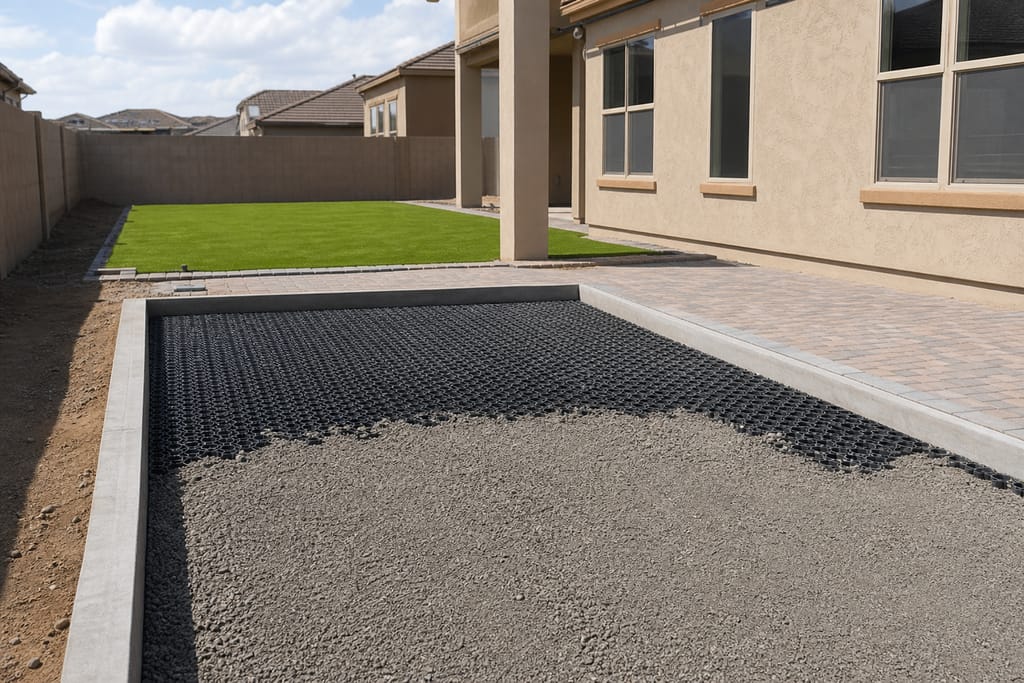
Drought-tolerant base layer
Base material selected for stability in Florence's dry, low-moisture soil.
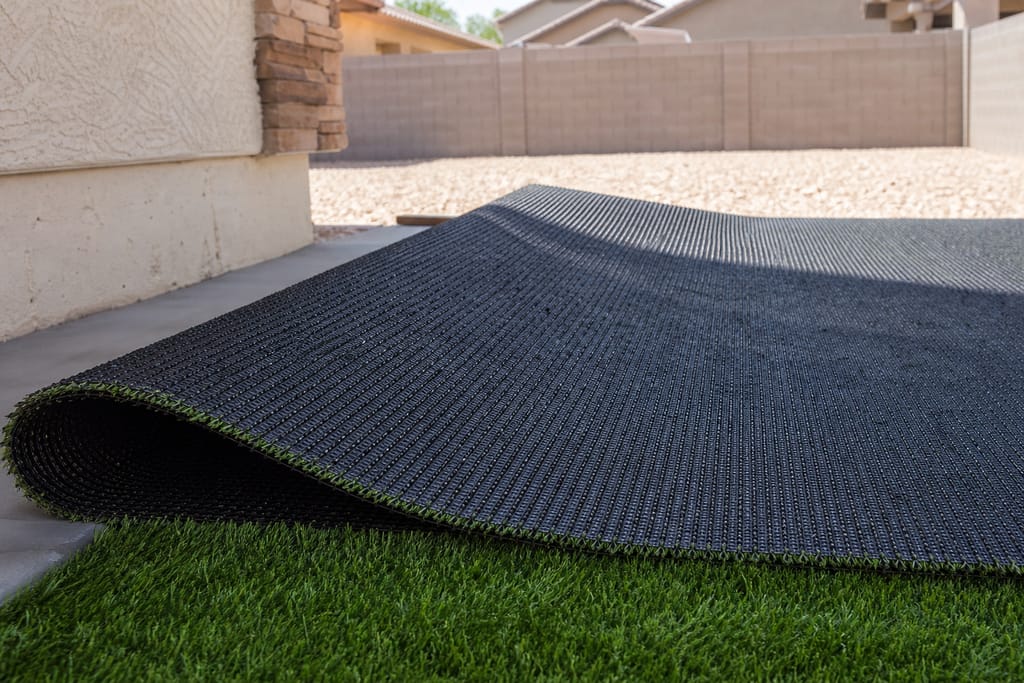
UV-protected backing
Backing treated with UV stabilizers so it doesn't crack after repeated summer heat cycles.
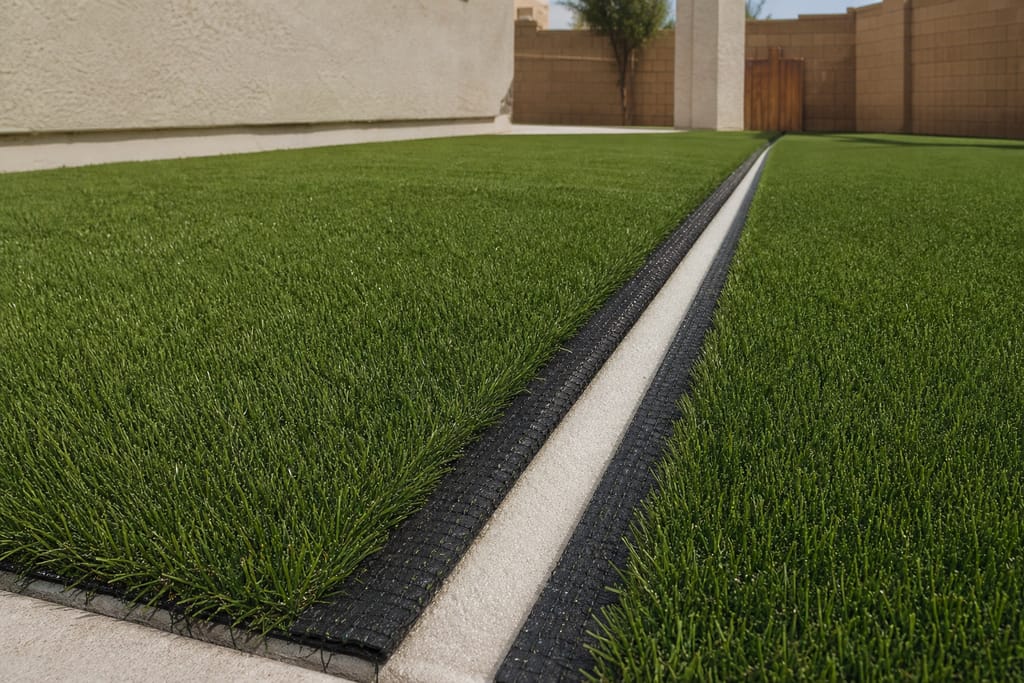
Thermal break seams
A seaming technique that leaves room for material expansion instead of forcing a tight, stress-prone seam.
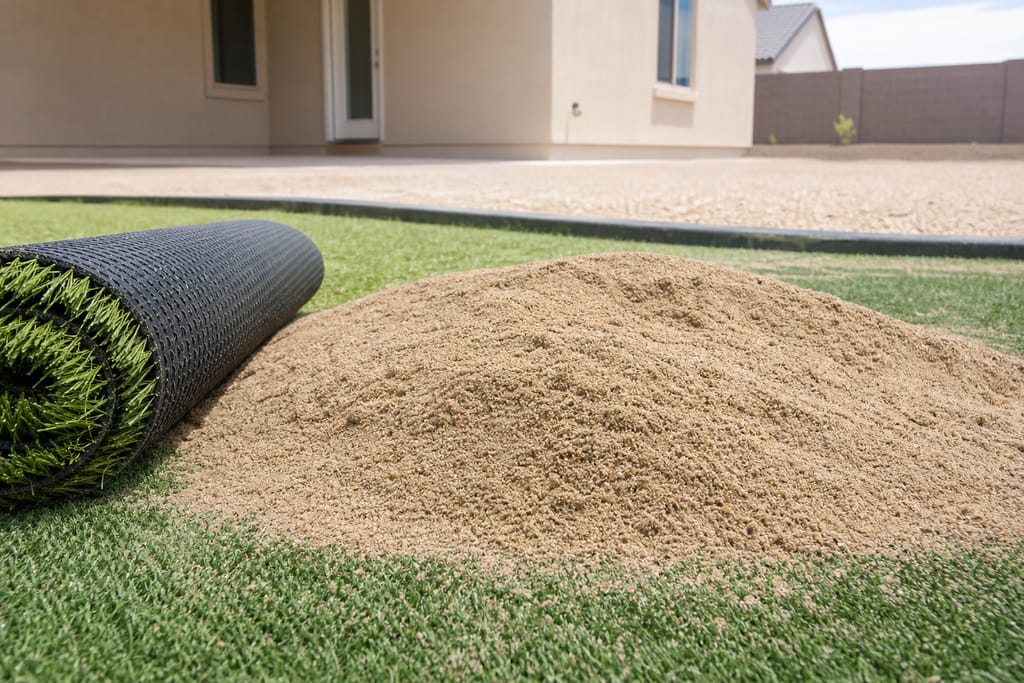
Sand-based filler
Sand filler adds stability while still letting heat dissipate rather than trap.
Questions on materials?
Get a Free EstimateFAQs
Desert-Adapted Turf Installs FAQs
What's the best artificial grass for extreme heat climates like Florence?
Look for turf with UV-stabilized fibers and a reflective or cooling infill blend. These products resist fading and keep surface temps lower than standard turf on direct-sun days.
Does desert-adapted turf actually feel cooler?
It won't feel cold, but reflective infill and proper fiber choice noticeably reduce peak surface temperature compared to standard turf in the same spot.
What's the downside to artificial turf in extreme heat?
Surface temperature is the main tradeoff, turf can get hotter than natural grass on exposed, direct-sun afternoons. Shade, cooling infill, and fiber choice all help manage it.
How much more does desert-adapted turf cost?
Expect a modest premium over standard turf, usually a few dollars more per square foot, for the heat-resistant fiber and reflective infill upgrade.
Can desert-adapted turf go anywhere in my yard?
But it matters most in full-sun areas. Shaded sections can often use standard turf to save on cost if your yard has mixed sun exposure.
Is desert-adapted turf worth it for a small patio area?
For small, high-exposure spots like a south-facing patio edge, yes, that's often where standard turf gets uncomfortably hot fastest.
Next step
Get a Desert-Adapted Turf Installs Estimate in Florence
Call (928) 882-6752 or request a free estimate built around your yard's actual sun exposure.
Before & after
Before and After Desert-Adapted Turf Installs
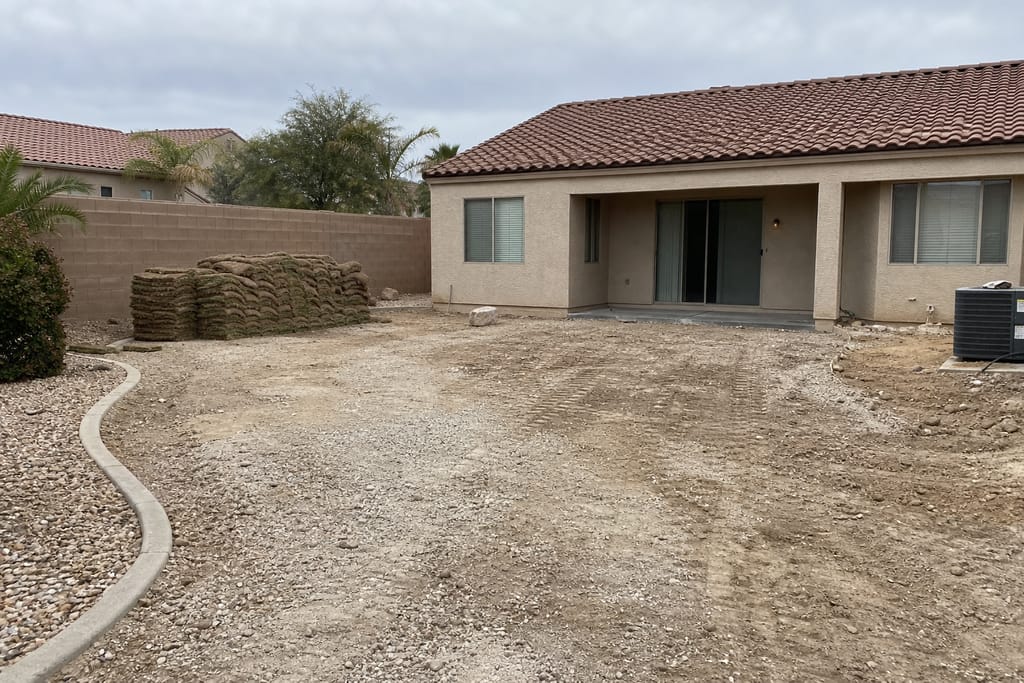
Before 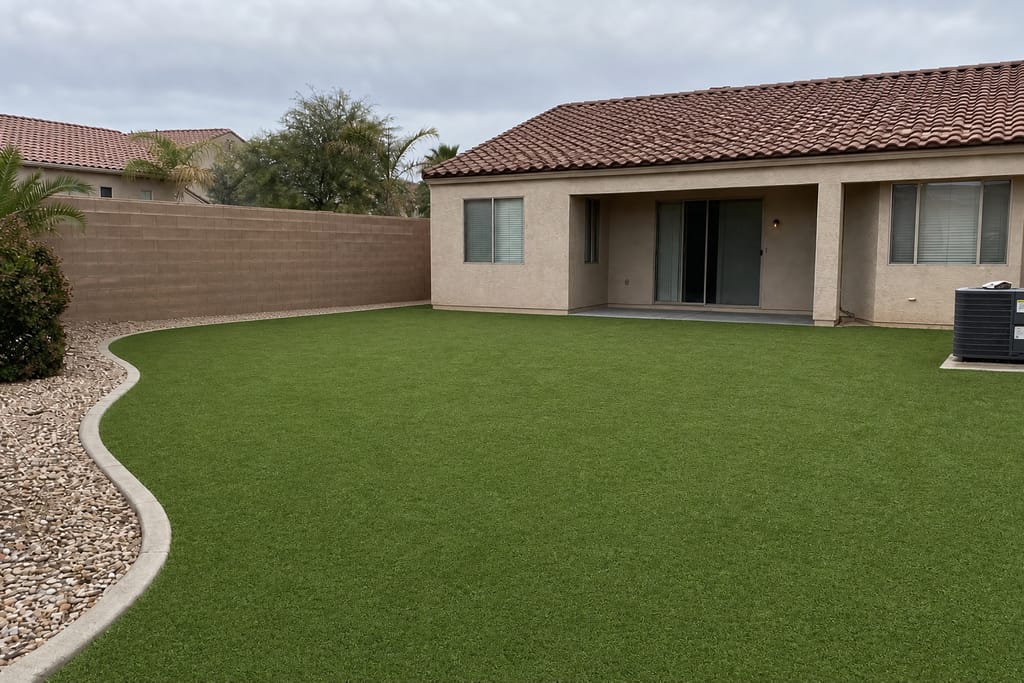
After
Timeline
How Long Does a Desert-Adapted Turf Installs Take?
- 01
Stage 1
Most projects follow the same general timeline as a standard install, with extra time for material selection.
- 02
Consult and sun exposure review
same day - 03
Base prep and reflective layer
1–2 days - 04
Turf install and seaming
1 day - 05
Surface temperature check
same day
Need a schedule that fits?
Get a Free EstimateMore services
Other Artificial Turf services
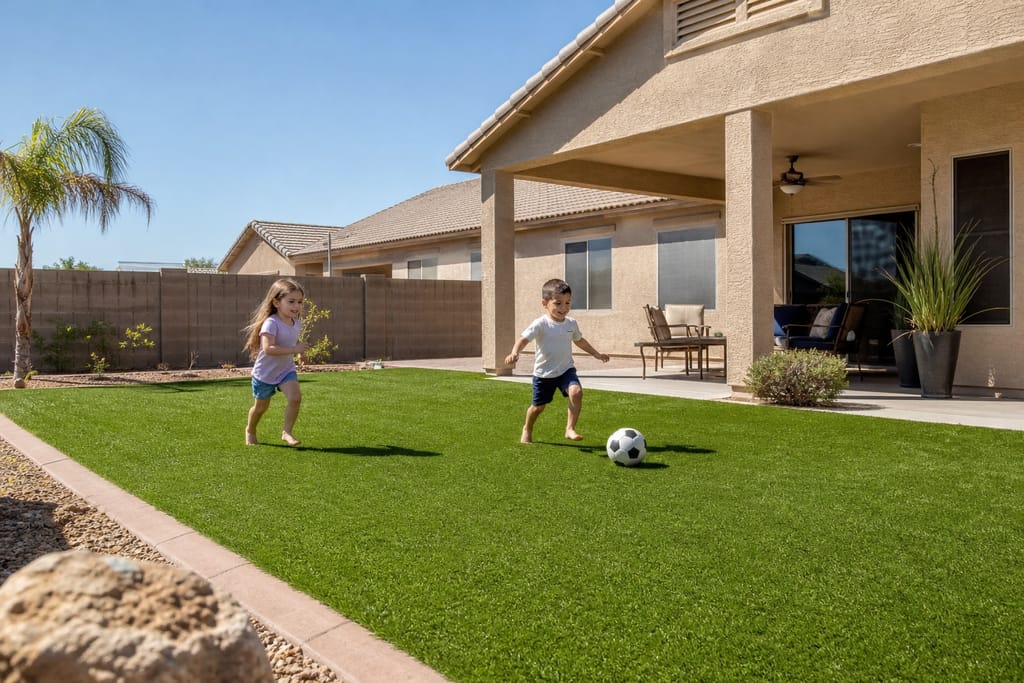
Artificial Turf Installation
Full artificial turf installation in Florence, AZ with base prep, seaming, and infill built for desert heat. Free estimates.
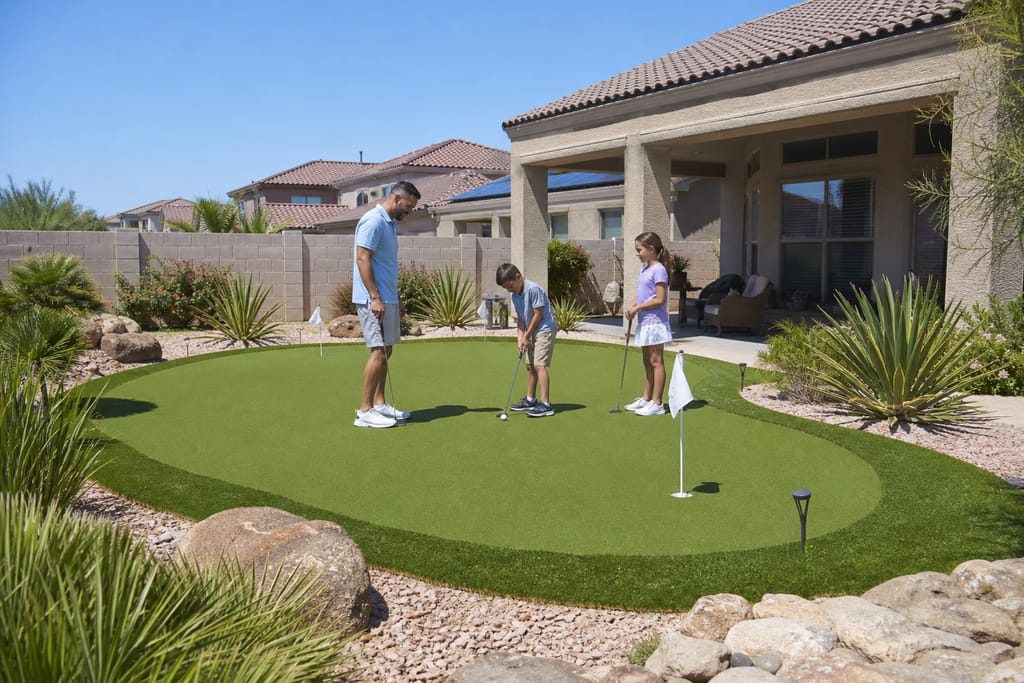
Putting Green Installation
Backyard putting green installation in Florence, AZ with contoured breaks, regulation cups, and heat-stable turf. Free estimates.
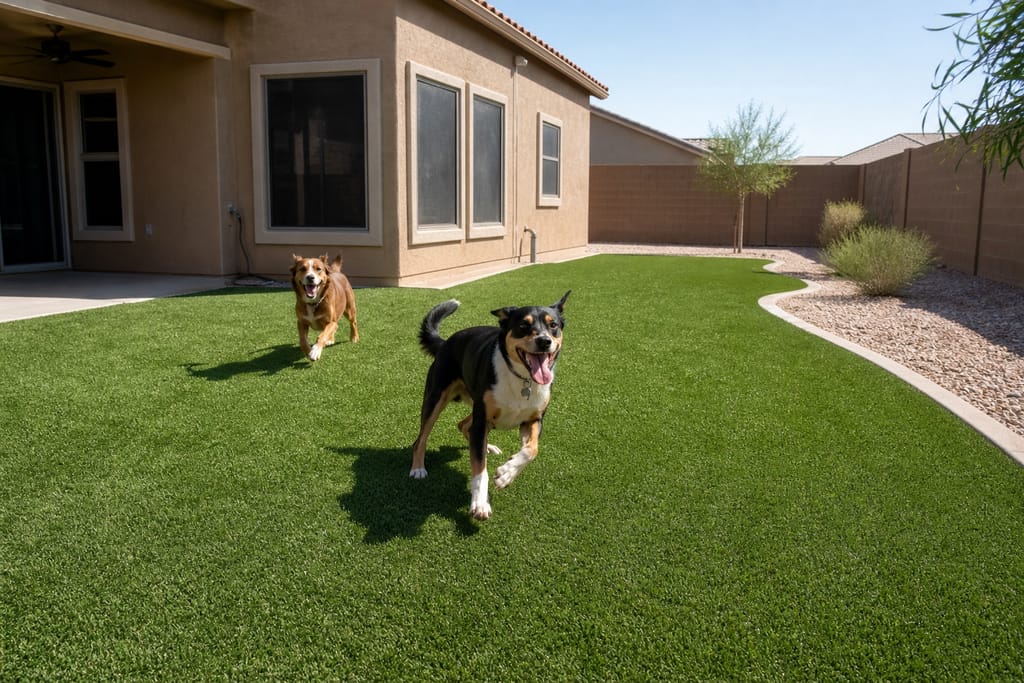
Pet Turf Installation
Pet turf installation in Florence, AZ with antimicrobial infill and fast-draining base. Odor control built in. Free estimates.
Ask about Desert-Adapted Turf Installs
Tell us about the project and how to reach you.